


Introduction: Understanding How a Baseball Cap Should Fit
A properly fitted baseball cap should feel comfortable, secure, and natural without being too tight or too loose. Whether you are buying caps for personal use or sourcing products for a brand, understanding how a baseball cap should fit is essential for comfort, appearance, and customer satisfaction.
For international brands, wholesalers, and retailers, choosing the correct baseball cap size guide is also a critical part of product development. A professional baseball cap manufacturer, OEM supplier, and custom hat factory must consider head circumference, crown structure, closure design, and fabric performance to create caps that fit different customers.
At Wanjia Hat Factory, we specialize in custom baseball cap manufacturing for global brands and businesses. From low-profile dad hats to structured snapback caps and sports baseball caps, we help customers develop products with the right fit, shape, and wearing experience.
This complete guide explains:
How a baseball cap should fit
How to measure cap size correctly
Different baseball cap sizing systems
Common fitting problems and solutions
How manufacturers create better-fitting caps
Practical tips for brands ordering custom baseball caps
Why Baseball Cap Fit Matters
A baseball cap is not only a fashion accessory. It is a product that customers wear directly on their heads for hours.
A poor fit can create problems such as:
Head pressure
Uncomfortable tightness
Falling off during activities
Poor appearance
Lower customer satisfaction
For brands selling custom baseball caps, fit quality directly affects:
Customer reviews
Repeat purchases
Brand reputation
Return rates
A premium baseball cap should provide:
Comfort + Stability + Good Shape + Proper Proportion
How Should a Baseball Cap Fit? The Basic Rules
A well-fitting baseball cap should follow several basic principles.
1. The Crown Should Sit Naturally
The crown is the main upper part of the cap.
A correct fit means:
The crown covers the head comfortably
It does not create excessive pressure
It does not sit too high above the head
If the crown is too shallow:
The cap may look awkward
It may slide backward
It may not cover the head properly
If the crown is too deep:
The cap may look oversized
The front panel may collapse
2. The Sweatband Should Touch the Head Comfortably
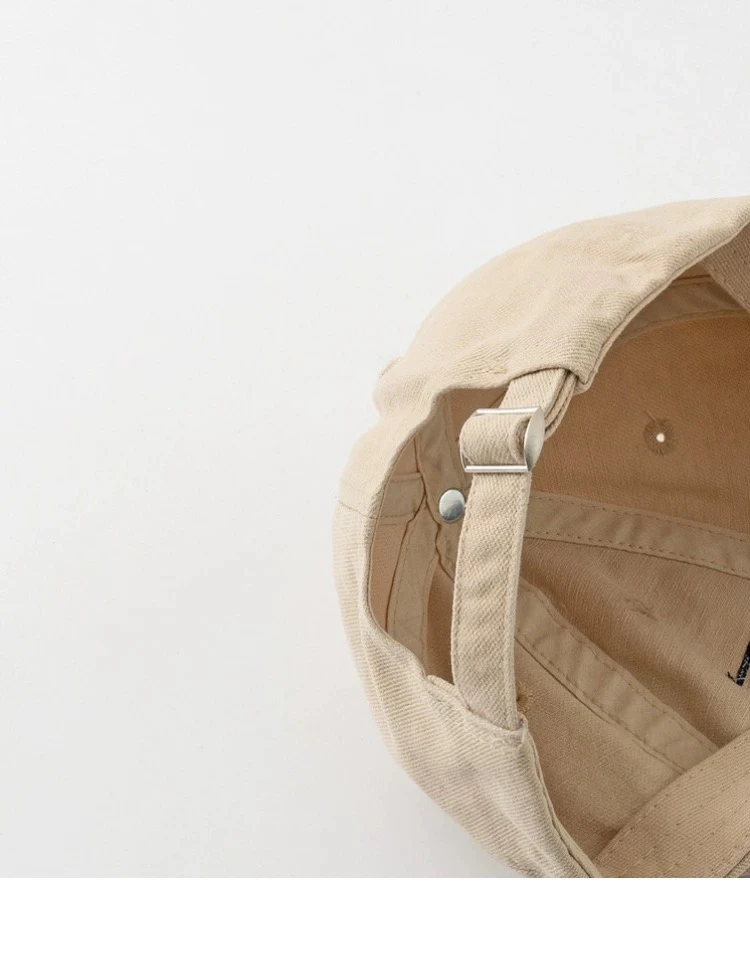
The inner sweatband should gently contact the forehead.
A good baseball cap should:
Stay in position
Absorb moisture
Avoid leaving deep pressure marks
The cap should feel secure but not restrictive.
3. The Brim Should Match Your Face Shape
The brim affects both function and appearance.
A properly fitted brim should:
Extend naturally above the eyes
Follow the shape of the face
Provide sun protection
Common brim styles include:
| Brim Style | Features |
| Curved brim | Classic baseball look |
| Flat brim | Streetwear and modern style |
| Pre-curved brim | Ready-to-wear convenience |
Baseball Cap Size Guide and Measurements
Baseball cap sizes are usually based on head circumference.
The most common measurement method is centimeters or inches.
Standard Baseball Cap Size Chart
| Size | Head Circumference | Common Users |
|---|---|---|
| Small | 54–56 cm (21.3–22 in) | Youth, smaller adults |
| Medium | 56–58 cm (22–22.8 in) | Most adults |
| Large | 58–60 cm (22.8–23.6 in) | Larger adults |
| XL | 60–62 cm (23.6–24.4 in) | Extra-large sizing |
However, actual fit depends on:
Crown height
Fabric thickness
Closure type
Cap construction
How to Measure Your Head for a Baseball Cap
Correct measurement is the first step to choosing the right cap size.
Follow these steps:
Step 1: Prepare a Measuring Tape
Use a flexible tape measure.
Avoid using a rigid ruler because it cannot follow the head shape.
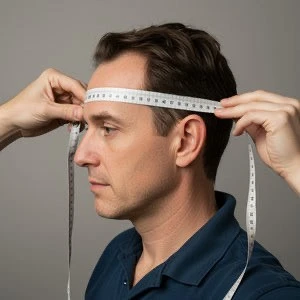
Step 2: Measure Around Your Head
Place the tape:
- Around the middle of your forehead
- Above your ears
- Around the widest part of your head
Keep the tape:
- Level
- Comfortable
- Not too tight
Step 3: Record the Measurement
For example:
Your head measurement:
57 cm
Recommended size:
Medium (56–58 cm)
Expert Tip for Buyers
For custom baseball cap production, manufacturers usually recommend collecting customer size data before selecting the size range.
For example:
A fashion brand targeting North America may choose:
Medium: 56–58 cm
Large: 58–60 cm
A youth sports brand may require:
Small
Medium
Different Baseball Cap Styles and Their Fit
Different cap structures create different wearing experiences.
Low Profile Baseball Caps
Low-profile caps have:
- Shorter crown height
- More relaxed appearance
- Casual styling
Common applications:
- Dad hats
- Lifestyle brands
- Streetwear collections
Fit characteristics:
- Closer to the head
- Softer appearance
- Less structured
Mid Profile Baseball Caps
This is the most common commercial style.
Advantages:
- Balanced shape
- Suitable for most customers
- Comfortable daily wear
Used by:
- Sports brands
- Corporate merchandise companies
- Outdoor brands
High Profile Baseball Caps
High-profile caps have:
Taller crown
More structured appearance
Popular for:
- Snapback hats
- Streetwear brands
- Team caps
Adjustable vs Fitted Baseball Caps: Which Fits Better?
There are two major baseball cap sizing systems.
Adjustable Baseball Caps
Adjustable caps include:
Snapback closure
Metal buckle
Velcro strap
Advantages:
Flexible sizing
Easier inventory management
Suitable for different head sizes
Popular for:
Promotional caps
Fashion brands
Outdoor products
Fitted Baseball Caps
Fitted caps have fixed sizes.
Advantages:
Cleaner appearance
Professional baseball style
Better customized fit
Challenges:
Brands need more size options
Inventory management is more complicated
Adjustable vs Fitted Cap Comparison
| Feature | Adjustable Cap | Fitted Cap |
| Size flexibility | High | Low |
| Inventory requirement | Lower | Higher |
| Fit accuracy | Medium | High |
| Popularity | Very high | Medium |
| Best for | Mass market | Premium collections |
Common Baseball Cap Fitting Problems and Solutions
Even high-quality caps may have fitting issues if the design is not optimized.
Problem 1: Cap Feels Too Tight
Possible reasons:
Incorrect size
Small head opening
Non-flexible material
Solutions:
Choose a larger size
Use adjustable closure
Select stretch fabric
Problem 2: Cap Slides Backward
Possible reasons:
Crown too shallow
Incorrect circumference
Weak sweatband grip
Solutions:
Increase crown depth
Adjust pattern structure
Improve internal construction
Problem 3: Cap Looks Too Large
Possible reasons:
Crown height too high
Incorrect style selection
Solutions:
Choose:
Low-profile cap
Smaller size
Softer fabric
How OEM Manufacturers Improve Baseball Cap Fit
Professional manufacturers use several techniques to improve fit.
1. Pattern Optimization
Factories adjust:
Panel shape
Crown height
Seam position
Small pattern changes can significantly improve comfort.
2. Fabric Testing
Different fabrics behave differently.
For example:
Cotton:
Soft
Comfortable
May shrink slightly
Polyester:
Stable
Lightweight
Better shape retention
3. Size Testing During Sampling
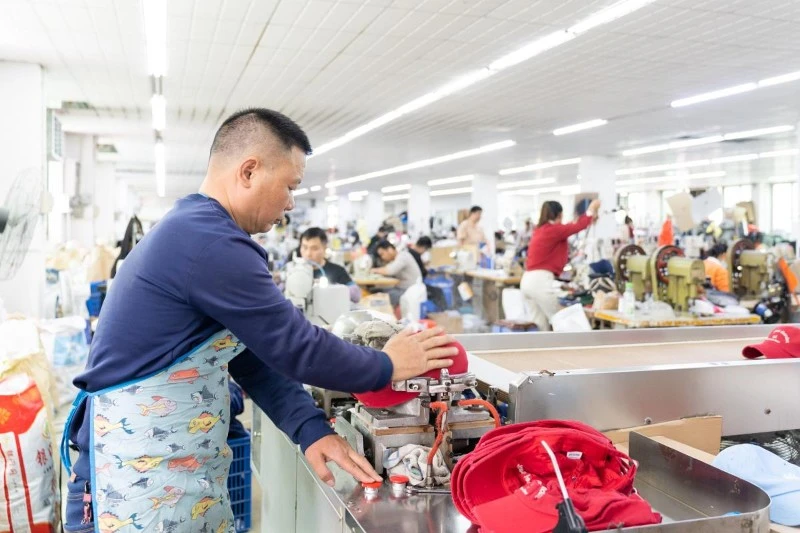
Before bulk production, manufacturers test:
Different head sizes
Wearing comfort
Shape appearance
This reduces production risks.
Latest Trends in Baseball Cap Sizing and Customization
Trend 1: Inclusive Size Ranges
More brands are expanding size options.
Instead of only offering one-size-fits-all products, companies increasingly provide:
Small sizes
Standard adult sizes
XL options
This improves customer experience.
Trend 2: Performance Fit for Sports Caps
Sports brands increasingly focus on:
Lightweight materials
Sweat management
Secure fitting systems
Examples include:
Running caps
Golf caps
Outdoor adventure hats
Trend 3: Personalized Hat Manufacturing
Custom brands are exploring:
Custom crown height
Custom brim shape
Custom sizing labels
OEM manufacturers can help brands create unique fitting experiences.

How Brands Should Choose the Right Cap Size Range
For businesses ordering custom baseball caps, choosing sizes depends on the target market.
Step 1: Understand Your Customers
Consider:
Age group
Gender
Region
Usage scenario
Step 2: Select Appropriate Sizes
Example:
Lifestyle Brand
Recommended:
Adjustable caps
Medium/Large adult sizing
Sports Brand
Recommended:
Multiple sizes
Performance materials
Premium Fashion Brand
Recommended:
Customized fitted sizing
Step 3: Confirm Through Sampling
Before mass production:
Test samples
Collect feedback
Adjust patterns
This process helps create a better final product.
Why Choose Wanjia Hat Factory for Custom Baseball Caps?
As an experienced custom baseball cap manufacturer and OEM hat supplier in China, Wanjia Hat Factory helps global brands develop caps with excellent fit and consistent quality.
Our services include:
✔ Custom sizing solutions
✔ Low-profile and structured cap development
✔ Embroidery and printing customization
✔ Fabric sourcing
✔ Sample production
✔ Bulk manufacturing
✔ Quality inspection
We work with brands, wholesalers, and manufacturers worldwide to create customized headwear products.
FAQ
Q: 1. How Should A Baseball Cap Fit?
A: A baseball cap should fit comfortably around your head without feeling tight. The crown should sit naturally, and the cap should stay secure without sliding.
Q: 2. What Is The Standard Baseball Cap Size For Adults?
A: Most adult baseball caps fit between 56–60 cm head circumference. Medium and large sizes are the most common choices.
Q: 3. How Do I Know My Baseball Cap Size?
A: Measure your head circumference with a flexible tape around your forehead and above your ears, then compare the measurement with a baseball cap size chart.
Q: 4. Are Adjustable Baseball Caps Better Than Fitted Caps?
A: Adjustable caps offer more flexibility, while fitted caps provide a cleaner and more precise fit. The best choice depends on the target customer and product positioning.
Q: 5. Can A Manufacturer Customize Baseball Cap Sizes?
A: Yes. Professional OEM factories can customize crown height, circumference, closure systems, and sizing labels according to brand requirements.
Q: 6. Why Does My Baseball Cap Feel Uncomfortable?
A: Common reasons include incorrect size, unsuitable crown height, stiff materials, or poor pattern design.
References
International Organization for Standardization (ISO) – Textile and Apparel Standards
https://www.iso.org/
American Apparel & Footwear Association (AAFA) – Apparel Industry Resources
https://www.aafaglobal.org/
Textile Exchange – Sustainable Textile Industry Information
https://textileexchange.org/
ASTM International – Apparel and Textile Testing Standards
https://www.astm.org/
International Trade Centre (ITC) – Global Apparel Trade Information
https://www.intracen.org/

Conclusion
Knowing how a baseball cap should fit helps consumers choose better products and helps brands create stronger collections. A well-designed cap requires more than attractive colors and logos. Proper sizing, comfortable construction, and professional manufacturing expertise determine whether customers will love wearing it.
For brands looking for a reliable custom baseball cap manufacturer, working with an experienced OEM factory like Wanjia Hat Factory ensures better fit, better quality, and better market performance.