

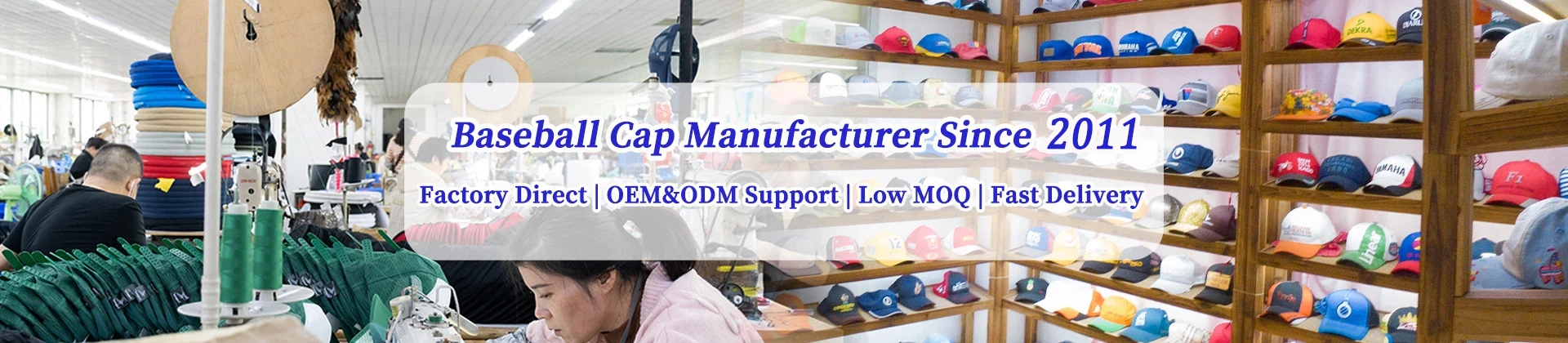
When it comes to wholesale or brand-customized hats, finding a reliable hat factory is crucial. Choosing the wrong supplier can lead to inconsistent product quality, delayed deliveries, increased costs, and even damage to your brand reputation.
This article will systematically explain how to choose a professional hat factory for bulk production, covering production experience, manufacturing capacity, customization capabilities, quality control, and supply chain management, along with actionable steps to help buyers make informed decisions.
1. Evaluate the Factory's Production Experience
1.1 History and Expertise
A high-quality hat factory should have at least 10 years of production experience. Experienced factories are familiar with production processes for different hat types, including bucket hats, baseball caps, trucker hats, and sun hats.
Action Steps:
Check the factory's website or B2B profile to confirm the founding year and main product lines.
Ask for references or case studies demonstrating experience in producing similar hat types.

1.2 Export Experience
Export experience indicates that the factory understands international testing standards, packaging requirements, and logistics processes, which can prevent delivery delays or customs issues.
Action Steps:
Ask if the factory has certifications such as CE, ISO, REACH, or FDA.
Request actual export examples, including shipped countries, batch sizes, and client feedback.
2. Assess Production Capacity and Facilities
2.1 Production Scale
Bulk orders require a factory with stable daily production capacity.
Action Steps:
Ask how many hats the factory can produce per day and whether this meets your order requirements.
Confirm if the factory can handle peak season demands or urgent orders with overtime production.
2.2 Equipment and Technology
Advanced manufacturing equipment ensures precise stitching, clear embroidery, and even printing.
Action Steps:
Visit the factory in person or review photos/videos of the production lines.
Confirm whether they use automated or semi-automated equipment to minimize human error.
3. Customization Capabilities (OEM/ODM)
3.1 Material Options
Top-tier factories offer a variety of materials, including cotton, cotton-poly blends, canvas, and eco-friendly recycled fabrics.
Action Steps:
Request material samples to test breathability, texture, and durability.
3.2 Style and Logo Customization
The factory should be able to produce hats according to your design, including hat shape, color, embroidery, or printing.
Action Steps:
Provide your design files for sample production to verify size, shape, and color.
Confirm if the factory supports double-sided designs or special techniques like heat transfer or leather labels.
3.3 Small-Batch Orders
Reliable factories can support small-batch customization, which is ideal for testing new designs or launching limited editions.
Action Steps:
Ask about the minimum order quantity (MOQ) and flexibility.
Test a small batch of samples to evaluate production quality and delivery efficiency.
4. Quality Control System
4.1 Comprehensive Inspection Process
Every hat should undergo thorough inspection, including material, stitching, shape, and functional performance (sun protection, waterproofing, breathability).
Action Steps:
Ask for details on the factory's QC process and check for inspection records and defect rates.
Request quality certificates or inspection reports.
4.2 Sample Approval
Testing samples before placing a bulk order is essential to prevent issues in mass production.
Action Steps:
Request free or paid samples to check hat shape, texture, stitching, and functional properties.
Only approve bulk production after confirming the samples meet your standards.
5. Pricing and Supply Chain Assurance
5.1 Factory Direct Pricing
Purchasing directly from the factory can eliminate middlemen costs and improve profit margins.
Action Steps:
Compare quotes from multiple factories and ensure prices reflect quality and service guarantees.
5.2 Logistics and Delivery
Experienced export factories can ensure safe packaging, smooth customs clearance, and timely delivery.
Action Steps:
Inquire about shipping methods and whether they offer FOB, CIF, or other international trade terms.
Understand estimated shipping times for sea and air transport to plan inventory accordingly.
6. On-Site Visits and Communication Tips
Factory Tour: Inspect the production environment, worker skills, and machine operation.
Sample and Production Standards: Verify that samples match bulk production quality to avoid inconsistencies.
Communication and Responsiveness: Assess the professionalism and responsiveness of the sales and customer service team, as this directly affects order efficiency.
Conclusion
Selecting a reliable hat factory is key to ensuring product quality, timely delivery, and cost efficiency for bulk orders. Core factors to consider include:
Extensive production experience and export capability
Sufficient production capacity and advanced equipment
OEM/ODM customization capabilities
Comprehensive quality control systems
Competitive pricing and reliable supply chain
By following these steps-screening, visiting, and verifying-buyers can identify trustworthy partners and significantly reduce procurement risks, ensuring a successful long-term collaboration.