


A bucket hat can look simple, but choosing the right material makes a major difference when it is designed for outdoor use. A good outdoor bucket hat needs to handle more than occasional rain. Depending on the application, it may also need to provide breathability, quick drying, UV protection, durability, and comfort.
So, what is the best material for a waterproof bucket hat?
The answer depends on how the hat will be used. Nylon, polyester, ripstop fabrics, waxed cotton, canvas, and treated cotton can all be suitable choices, but each offers a different balance of water resistance, weight, breathability, durability, and appearance.
This guide explains the most common waterproof bucket hat materials and how to choose the right option for hiking, fishing, travel, sports, and everyday outdoor use.
What Makes a Bucket Hat Waterproof?
The first thing to understand is that waterproof performance does not depend on the fabric fiber alone.
A nylon bucket hat, for example, is not automatically waterproof simply because it is made from nylon. The final water resistance can depend on several factors, including the fabric construction, coating, membrane, water-repellent treatment, stitching, and seam construction.
Water-Resistant vs. Waterproof
These two terms are often used interchangeably, but they do not mean exactly the same thing.
A water-resistant bucket hat can repel light rain or short exposure to moisture. Water tends to form droplets on the surface instead of immediately soaking into the fabric.
A waterproof bucket hat is designed to provide a higher level of protection against water penetration, usually through a combination of fabric construction, coating or membrane technology, and appropriate product construction.
For light outdoor activities, water resistance may be enough. For hiking, fishing, or prolonged exposure to heavy rain, a more complete waterproof construction is usually a better choice.
Why DWR Treatment Matters
DWR, or Durable Water Repellent, is a finish commonly applied to outdoor fabrics. It helps water form droplets on the fabric surface so that rain can roll away instead of quickly soaking into the material.
However, DWR does not automatically make a fabric fully waterproof. Its performance can also decrease over time because of washing, abrasion, and regular use.
For this reason, brands should consider the entire construction rather than choosing a fabric based only on whether it has a water-repellent finish.
Best Waterproof Bucket Hat Materials Compared
Different materials are suitable for different outdoor conditions.
| Material | Main Advantages | Best For |
|---|---|---|
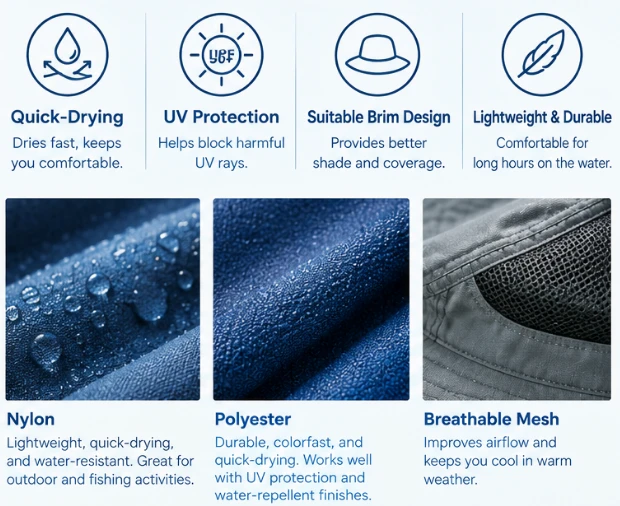
| Nylon | Lightweight, durable, quick drying | Hiking, fishing, outdoor sports |
| Ripstop Nylon | Lightweight and tear resistant | Technical outdoor use |
| Polyester | Durable, versatile, colorfast | Travel, sports, everyday outdoor use |
| Waxed Cotton | Water resistant with a classic look | Heritage and lifestyle brands |
| Canvas | Strong, structured, breathable | Workwear and casual outdoor use |
| Treated Cotton | Comfortable and breathable | Light rain and lifestyle applications |
The table provides a starting point, but the final performance also depends on fabric weight, weave, coating, membrane, and construction.
Nylon Bucket Hats: Lightweight Performance for Outdoor Use
Nylon is one of the most popular choices for outdoor bucket hats because it combines low weight with good durability.
It is particularly useful when a hat needs to be easy to carry and comfortable during long periods of outdoor activity. Nylon can also be treated with water-repellent finishes or combined with coatings and membranes to improve its resistance to rain.
Why Choose Nylon for Outdoor Bucket Hats?
Nylon is a practical choice for outdoor bucket hats because it offers a good balance of lightweight comfort, quick drying, abrasion resistance, packability, and outdoor durability. Its relatively low weight makes it comfortable for extended wear, while its quick-drying properties are useful when the hat is exposed to rain, sweat, or moisture. For hiking, fishing, camping, and travel, lightweight nylon can provide reliable everyday performance without making the hat feel bulky, making it a versatile material for outdoor-focused designs.
Why Ripstop Nylon Is Popular
Ripstop nylon uses a reinforced woven structure designed to help prevent small tears from spreading.
This makes it particularly useful for products that may experience regular abrasion or outdoor use. For technical outdoor bucket hats, ripstop nylon can be a strong choice when durability and low weight are both important.
Polyester Bucket Hats: Durable and Versatile
Polyester is a widely used material for outdoor bucket hats because it offers good durability, color retention, and versatility. It can also be made with different weights, coatings, and finishes to meet specific performance requirements.
Is Polyester Waterproof?
Polyester itself is not waterproof. Tightly woven polyester can provide some water resistance, while treatments such as DWR or PU coating can improve protection against moisture. For higher waterproof performance, polyester can also be combined with a waterproof membrane.
Polyester is a practical choice for sports, travel, promotional products, and everyday outdoor hats, especially when durability, easy care, and flexible performance are important.
Waxed Cotton Bucket Hats: Classic Water Resistance
For brands that want a more traditional outdoor appearance, waxed cotton offers a very different option.
Wax is applied to the cotton fabric to create a surface that helps repel water. The result combines the familiar texture of cotton with improved resistance to moisture.
Waxed cotton can work particularly well for heritage, lifestyle, hunting-inspired, and premium outdoor brands.
However, it is generally heavier than lightweight synthetic fabrics and may not provide the same quick-drying or technical performance as nylon or polyester.
Are Cotton and Canvas Good for Waterproof Bucket Hats?
Cotton and canvas can be excellent materials for comfortable and durable bucket hats, but untreated cotton absorbs moisture.
This means standard cotton should not be considered an ideal material for prolonged heavy rain.
When Cotton Can Work Outdoors
Treated cotton, cotton blends, and waxed cotton can provide improved water resistance. These materials can be useful when the product is designed for casual outdoor activities where comfort and appearance are more important than maximum weather protection.
Canvas is also valued for its strong structure and durability. It is a good option for workwear, casual outdoor styles, and heavier bucket hats, but it may not be the first choice for lightweight technical rain protection.
How to Choose the Right Waterproof Bucket Hat Material
The best material depends on the environment and the user's priorities.

For Hiking
Consider ripstop nylon or lightweight nylon when low weight, durability, quick drying, and packability are important.

For Fishing
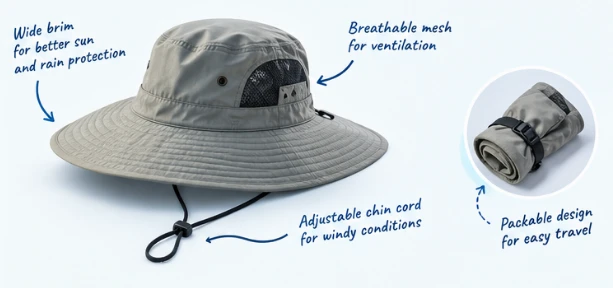
Nylon or polyester can be practical choices, especially when combined with quick-drying construction, UV protection, and a suitable brim design.
For Travel
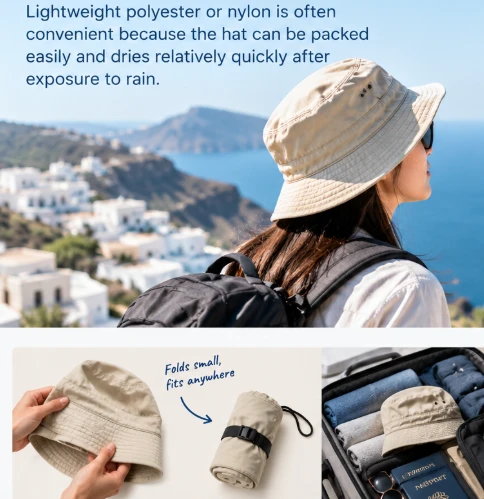
Lightweight polyester or nylon is often convenient because the hat can be packed easily and dries relatively quickly after exposure to rain.
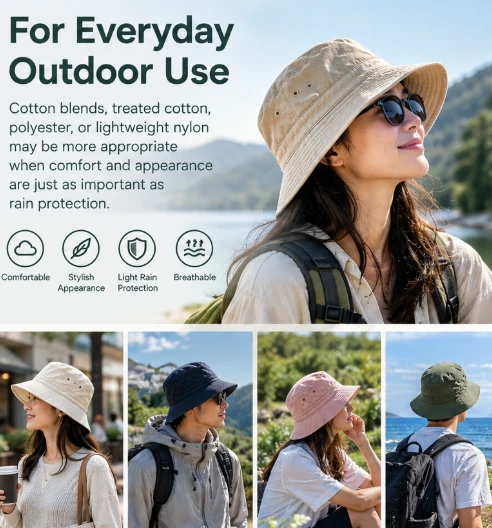
For Everyday Outdoor Use
Cotton blends, treated cotton, polyester, or lightweight nylon may be more appropriate when comfort and appearance are just as important as rain protection.
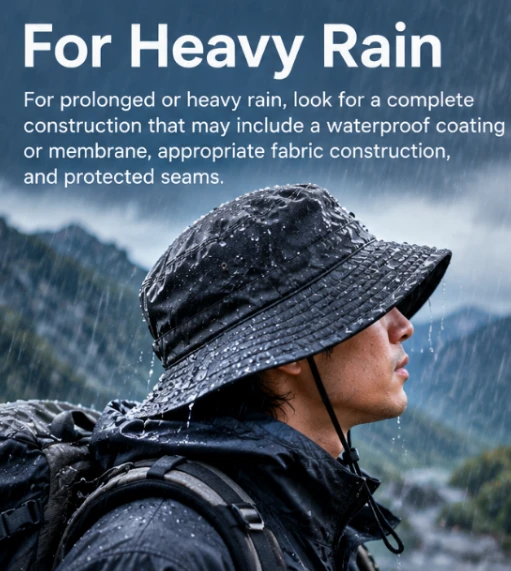
For Heavy Rain
For prolonged or heavy rain, look for a complete construction that may include a waterproof coating or membrane, appropriate fabric construction, and protected seams.
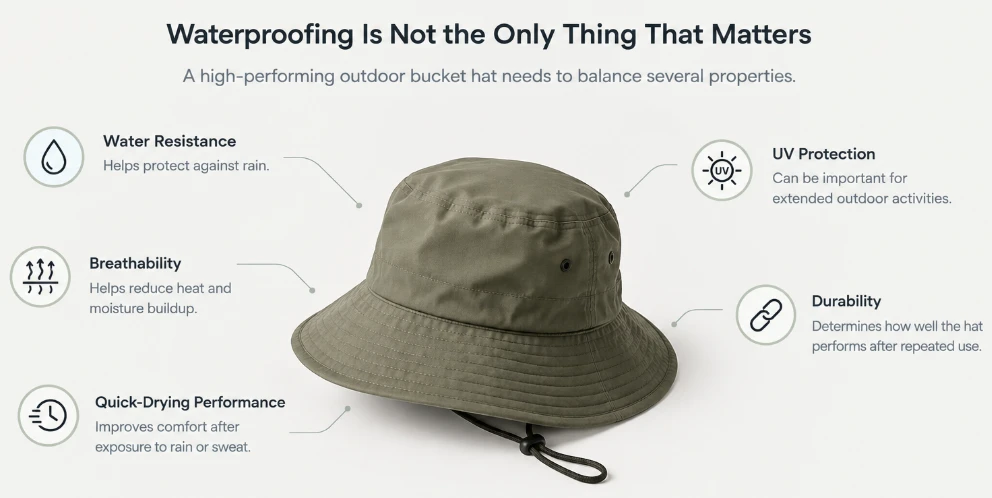
Waterproofing Is Not the Only Thing That Matters
A high-performing outdoor bucket hat needs to balance several properties.
Water resistance helps protect against rain.
Breathability helps reduce heat and moisture buildup.
Quick-drying performance improves comfort after exposure to rain or sweat.
UV protection can be important for extended outdoor activities.
Durability determines how well the hat performs after repeated use.
For example, a highly water-resistant fabric may not be the most comfortable choice for hot-weather hiking if it traps too much heat. In many cases, the best outdoor bucket hat is not the one with the highest waterproof rating, but the one that provides the right balance for its intended use.
What Brands Should Consider When Developing Custom Waterproof Bucket Hats
For brands developing custom outdoor bucket hats, material selection should be considered before the final sample is approved. Start by defining the intended application, whether the hat is designed for hiking and camping, fishing, travel, outdoor sports, workwear, lifestyle use, or promotional products. Based on the application, you can then determine the most suitable fabric composition and weight, coating or treatment, lining, brim structure, UV protection, and adjustment system.
A physical sample should also be evaluated as a complete product rather than based on the fabric alone. Details such as stitching, seams, brim construction, lining, fit, and finishing can all affect the hat's overall appearance, comfort, durability, and wearing experience. At WANJIA, we help brands evaluate suitable material options based on the intended use, product positioning, customization requirements, and target market before moving into sample development.
Final Thoughts
There is no single best material for a waterproof bucket hat.
Nylon is a strong choice for lightweight outdoor performance. Ripstop nylon adds extra durability for demanding activities. Polyester offers versatility and easy-care performance, while waxed cotton provides a classic water-resistant appearance. Cotton and canvas can also work well when comfort, structure, and lifestyle styling are the priority.
The key is to choose the material based on the actual conditions the hat will face.
If you are developing a custom waterproof bucket hat for an outdoor, fishing, travel, sports, or lifestyle brand, start with the end use rather than simply choosing the word "waterproof." The right combination of fabric, finish, construction, and design can make a much bigger difference in the final product.