

Whether in the European and American street fashion market, cross-border e-commerce platforms, or brand customization projects, the demand for bucket hats continues to grow, and the order structure is increasingly leaning towards bulk purchases and long-term repeat orders.
Based on our 15 years of actual production experience as a hat factory, the focus of customers when purchasing bucket hats has changed significantly. Early on, customers focused more on price and style, while now they are more concerned about supply chain stability, product consistency, the ability to replenish stock regularly, and whether the factory has genuine OEM/ODM capabilities.

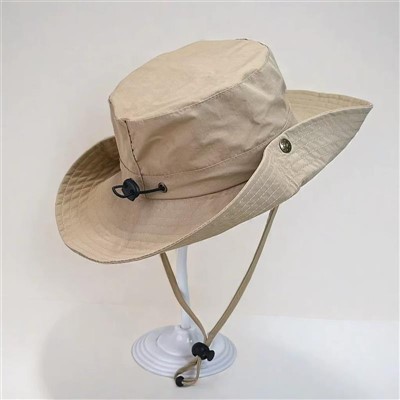
The Real Reasons for the Continued Growth of the Bucket Hat Market in 2026
The reason for the continued growth of the bucket hat market globally is essentially because it has transformed from a single-function product into a "basic fashion item." In the European and American markets, bucket hats are not only used for sun protection but are also widely used in everyday wear, music festivals, outdoor activities, brand collaborations, and corporate promotions.
In the cross-border e-commerce sector, this product's characteristics are even more pronounced; it is a typical "high-repurchase SKU product." Many sellers don't engage in one-off sales; instead, they continuously replenish stock based on sales volume. If a color or style performs well, they'll keep placing repeat orders.
Simultaneously, the demand for brand customization is rapidly increasing. More and more companies want to use bucket hats for brand exposure, such as using customized logo products at trade shows, events, and as gifts.
The True Capabilities of a High-Quality Bucket Hat Factory
A mature bucket hat factory must possess stable large-scale production capacity. This isn't just about whether they can produce it, but whether they can maintain consistent delivery times even when multiple orders are running simultaneously. Especially during peak seasons with concentrated orders, production capacity scheduling directly determines whether delivery will be delayed.
While bucket hats may seem simple in structure, actual production has strict requirements for hat depth, brim curvature, and head circumference. Without a mature template system, size discrepancies between different batches of the same order can easily occur, significantly impacting brand clients.
Customization capabilities have become a basic requirement for modern factories, encompassing embroidery, printing, woven labels, washing labels, and packaging design. A factory that cannot support a complete OEM process will find it difficult to enter a brand's supply chain.
Three Typical Types of Fisherman's Hat Factories in the Market
Production Capacity Factories: These factories are typically large-scale with well-equipped facilities, suitable for handling long-term orders of tens of thousands of pieces or more. Their advantages are stability and strong cost control, but they have limited flexibility in small-batch customization.
Customization Factories: These factories lean towards OEM/ODM business, adjusting patterns, materials, and processes according to customer needs. They are more suitable for cross-border e-commerce sellers and brand clients because they can support differentiated product development while maintaining good quality stability.
Design-Oriented Factories: These factories are usually smaller but have advantages in creative design and limited-edition development, making them more suitable for the high-end market or collaborative products. However, their production capacity is limited, making them unsuitable for large-scale, continuous replenishment.
Understanding supplier types is more important than simply finding the "cheapest factory," as different business models correspond to different factory structures.
Why More and More Clients Choose Direct Factory Cooperation
When order sizes are small, sourcing through trading companies seems more convenient, but as orders grow, the advantages of direct factory connections become increasingly apparent.
Factories can directly control the production process, completing everything from fabric procurement to finished product shipment within the same system. This results in stronger quality consistency and reduces intermediate information errors. In the customization process, the factory can make structural adjustments based on customer needs, not just surface modifications, which is crucial for brand clients.
Our Practical Experience in Bucket Hat Production
As a hat factory with 15 years of production experience, we have long served cross-border e-commerce clients, brand clients, and wholesale clients, accumulating extensive and stable production experience in bucket hat projects.
In actual production, we focus more on batch consistency than the perfection of individual products. All orders undergo structural confirmation at the sample stage, including hat proportions, fabric selection, and logo craftsmanship, and then are strictly executed according to sample standards during the mass production stage.
