

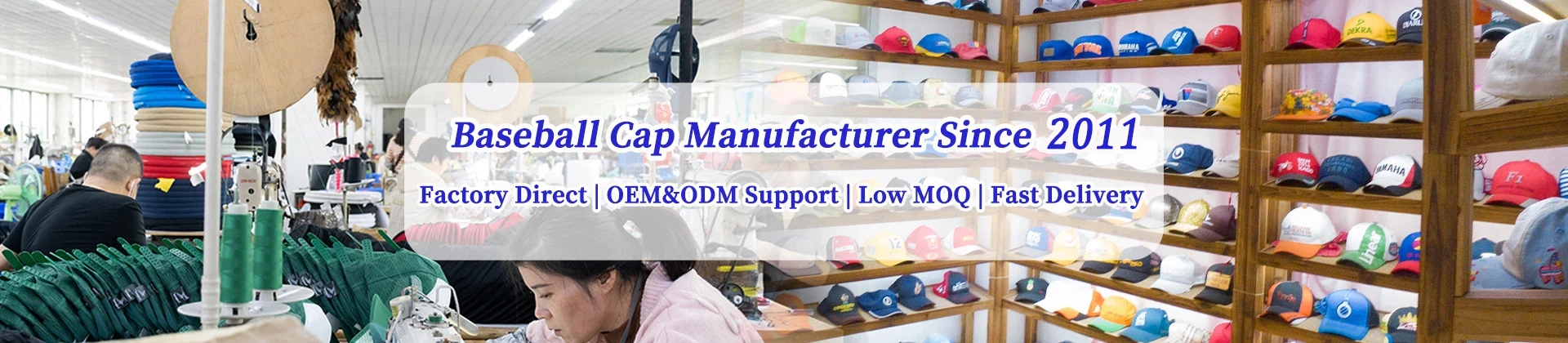
Why Choosing the Right Hat Factory is Crucial
When sourcing hats, many buyers initially focus on price, believing that a lower price means a larger profit margin. However, in practice, the choice of manufacturer has a far greater impact on product quality stability, delivery reliability, and long-term brand development than price alone.
If you choose an inexperienced or poorly managed factory, problems usually won't surface initially but will gradually emerge during mass production. These problems may include inconsistent workmanship, color deviations, delivery delays, and even misunderstandings when communicating key requirements. Therefore, when choosing a Chinese hat manufacturer, you should consider long-term cooperation and supply chain stability, rather than simply comparing prices.
Assessing Factory Experience and Industry Focus
To determine if a hat factory is worth cooperating with, start with its industry experience and focus. Factories that have long focused on hat production typically have more mature systems in material selection, structural design, and process control.
It's also necessary to confirm whether the factory focuses on the niche market of hats, rather than producing a variety of unrelated products simultaneously. Higher focus indicates greater expertise in baseball caps, bucket hats, trucker hats, etc.
Product Range and Customization Capabilities
A professional hat manufacturer boasts a diverse product line, capable of producing mainstream styles such as baseball caps, trucker hats, bucket hats, and sun hats. This not only reflects its production capacity but also demonstrates its ability to adapt to changing market demands.
Customization is more than just printing a logo; it involves coordination across multiple details, including embroidery techniques, printing methods, fabric combinations, color control, and hat structure design. For example, in logo presentation, flat embroidery, 3D embroidery, or heat transfer printing can be chosen based on brand positioning. Regarding fabrics, cotton, polyester, or functional fabrics need to be selected based on the intended use.


Production Capacity and Delivery Time Stability
Production capacity is not only reflected in output but, more importantly, in the ability to maintain stable output across different order sizes. A well-established hat factory typically has multiple production lines with clear divisions of labor in cutting, sewing, embroidery, and finishing. This systematic operation effectively improves production efficiency and reduces quality fluctuations caused by human error.
On-time delivery is equally crucial, as for most customers, timely delivery directly impacts sales plans, especially for seasonal products or promotional activities. Delays can result in significant losses. Factories with mature production management systems can provide clear production schedules and continuous progress feedback during production, allowing customers to maintain control over their orders.
Quality Control System and Certification Standards
Product quality stability is not guaranteed by a single inspection, but rather by a comprehensive quality control system. Professional hat manufacturers establish multiple inspection points at different stages of production, from raw material intake to semi-finished product manufacturing and final product shipment. Each stage undergoes rigorous inspection to ensure the product meets established standards.
Furthermore, possessing ISO quality management system certification is also an important criterion for judging a factory's management level, as this certification typically indicates that the factory has a standardized system for process management, quality control, and continuous improvement.
The Importance of Sample Testing and Small-Batch Trial Orders
Before formal cooperation, sample testing provides a direct understanding of the factory's actual capabilities, including workmanship details, fabric texture, and logo presentation. These are crucial indicators of whether the factory meets requirements.
After confirming the samples, conducting small-batch trial orders further verifies the factory's performance in actual production, including quality consistency, delivery time control, and communication efficiency. Through this process, buyers can screen for truly reliable partners with lower risk, laying the foundation for subsequent large-scale cooperation.