

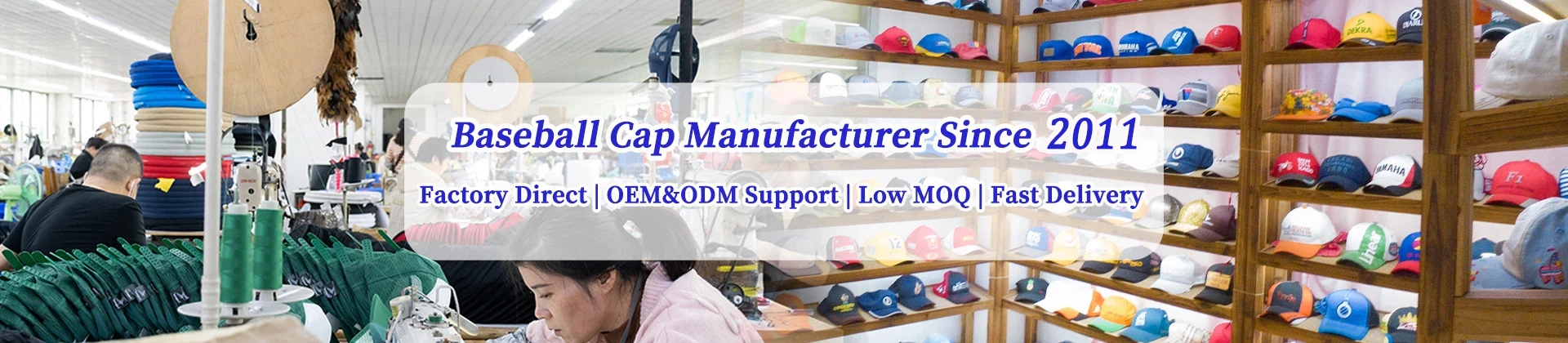
Today, we'll explain hat making in simple terms.
1. Fabric Selection
The first step in making a hat is choosing the right fabric.
Common fabrics include cotton, canvas, denim, and polyester.
Cotton is breathable and comfortable, perfect for summer; polyester is lightweight and wrinkle-resistant, making it suitable for sports hats; canvas and denim are sturdy and durable, making them suitable for trendy styles.
2. Pattern Making
Pattern making is the process of designing the "paper pattern" for the hat, much like a cutting plan for clothing.
The designer will first draw the shape and dimensions of the hat.
Different hat patterns have different shapes, for example, a baseball cap has six panels, while a bucket hat has a rounded top and a brim.
An accurate pattern making ensures that the finished hat will look and fit properly.
3. Cutting
Once you have the paper pattern, you can cut the fabric according to the pattern.
Most factories now use automatic cutting machines, which are fast and precise.
For hats with multiple colors, the fabric should be cut in batches to avoid confusion.

4. Sewing
This is the most critical step in hat making.
First, sew the top panels together, then sew the brim.
Some hats also require lining, sweatbands (sweat-absorbing strips), and reinforcements.
This step determines the hat's sturdiness and comfort, so high-quality thread and craftsmanship are essential.
5. Adding Accessories
Main accessories for hats include:
Metal buckles or plastic clips (for size adjustment)
Embroidered/printed logos (for branding or decoration)
Labels (to indicate size, material, etc.)
6. Quality Inspection
After the hat is finished, it undergoes a rigorous quality inspection.
Check for neat stitching and symmetry.
Check for dirt and damage.
Check for proper function of the adjustment buckles.
Only hats that pass this inspection can enter the packaging stage.
7. Packaging and Shipping
The final step is packaging.
Bulk goods are typically individually packed in plastic bags and then placed in cartons. Hats destined for export are also packaged in moisture-proof bags and treated to prevent pressure.
This ensures the hats remain intact and undamaged during transportation.